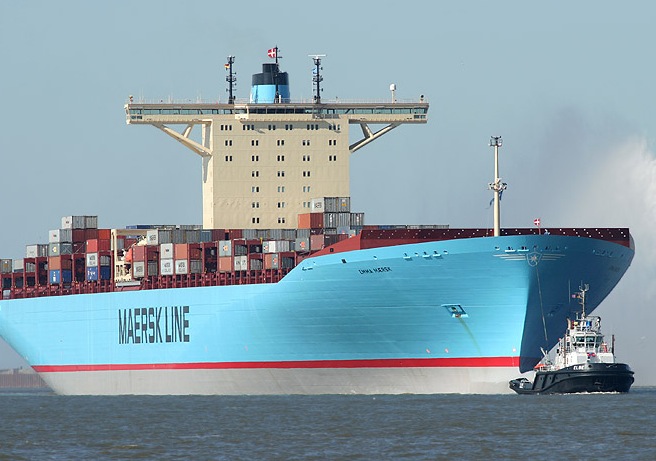
Containerized image via flickr user frank.merriman
Containerized…
Stumbling through the internet I came across this interesting article in the UK’s Financial Times titled The First Container Ship Sets Sail, April 26, 1956 and thought I would post it as a little history lesson to everyone out there. It reads:
On April 26 1956, the SS Ideal-X, an ageing tanker, departed from the Port of Newark, and docked in the Port of Houston five days later.
What was unusual in this otherwise routine coastal trip was that part of the cargo consisted of 58 35ft aluminium containers. The ship was owned by Malcom McLean of McLean Trucking, a man with little experience of shipping. What he did understand, however, was that if transportation could be integrated, the vast expense of shifting freight from land to sea, and back again, could be cut significantly.
McLean started buying ships. At first he tried transporting the loaded trailers by sea – after all, they could be wheeled on and off the boats. But this proved cumbersome and not particularly economic. The answer was to remove the trailers. Cranes would lift the boxed payloads from the trucks’ trailers, stack them on and below deck, and reload the trucks with incoming, standard-sized boxes. Freight costs fell from up to 25 per cent of the price of a product to negligible levels.
Today, McLean’s idea seems obvious, but it took years to convince the shipping industry. The Vietnam war provided a major boost, with container transport helping to keep American soldiers in a distant jungle fed, clothed and armed. The labour unions of the world’s major ports fought bitterly throughout the 1960s and 1970s for their members’ jobs, but it was a futile battle.
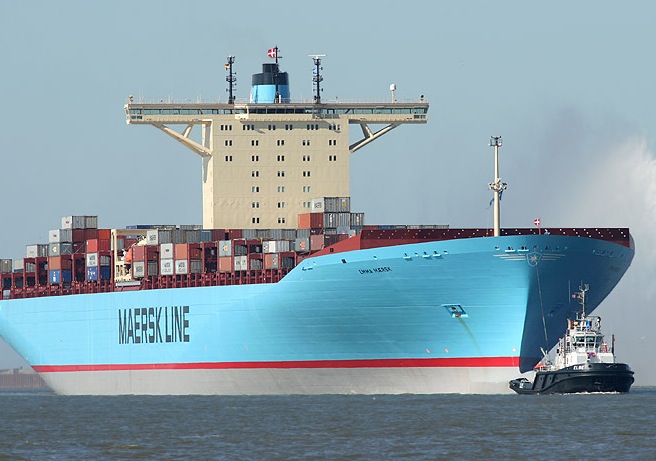
By the mid-1970s, New York’s docks were a memory, On the Waterfront a historical costume drama, and London’s derelict Docklands the cut-rate location for car chases in The Sweeney. From the modest beginnings of the Ideal-X, with its 50-odd boxes, the Emma Maersk, launched in 2006, is 1,300ft long and 180ft wide (too wide for the Panama Canal). It can carry 13,500 containers – up to a total weight of 156,000 metric tonnes. Its crew, on the other hand, numbers 13.
Source: FT.com
Containerized Shipping – A Timeline from APL
| 1971 |
| 58% of all cargo transported by APL in the Pacific moves in containers. |
|
|
|
|
|
Ralph K. Davies dies on September 19 at age 73.
|

Ralph K. Davies |
|
|
|
|
APL launches three C-8 class vessels, which will be converted to containerships in 1978.
|
|
|
|
 |
| 1973 |
|
U.S. involvement in Vietnam ends. Rising oil prices due to the Arab oil embargo result in sharp cost increases for transportation providers.
|
|
|
|
|
The President Wilson completes her last round-the-world voyage. Her retirement marks the end of the trans-Pacific passenger service that APL and its forebears have offered since 1867.
|
|
|
|
|
|
|
| 1974 |

The President Jefferson |
|
|
|
Four new Pacesetter class vessels, including the President Jefferson, are built between 1973 and 1974. They are the first fully containerized ships launched by APL. |
|
|
|
|
|
|
| 1977 |
W. Bruce Seaton becomes president and chief operation officer of APL in August. Seaton recruits specialists from all surface transportation modes to take the concept of containerization a step further.
|
|
|
|
|
APL’s round-the-world cargo service comes to an end. The company focuses on the growing trans-Pacific market.
|

W. Bruce Seaton |
|
|
|
|
|
|
|
| 1978 |
Seaton’s interdisciplinary team begins work intermodalism, a concept based on the seamless transfer of containerized shipments between the three modes of surface transportation – ship, train, and truck. |
|
|
|
|
|
|
| 1979 |
|
APL is the first shipping company to establish dedicated train service linking port cities with the interior of the U.S. Train and vessel schedules are coordinated, which results in a dramatic improvement transit time and reliability for APL customers.
|
 |
|
|
|
|
Source: American Presidents Containership Lines
Updated: February 5, 2026 (Originally published September 2, 2008)
Editorial Standards · Corrections · About gCaptain

 Join The Club