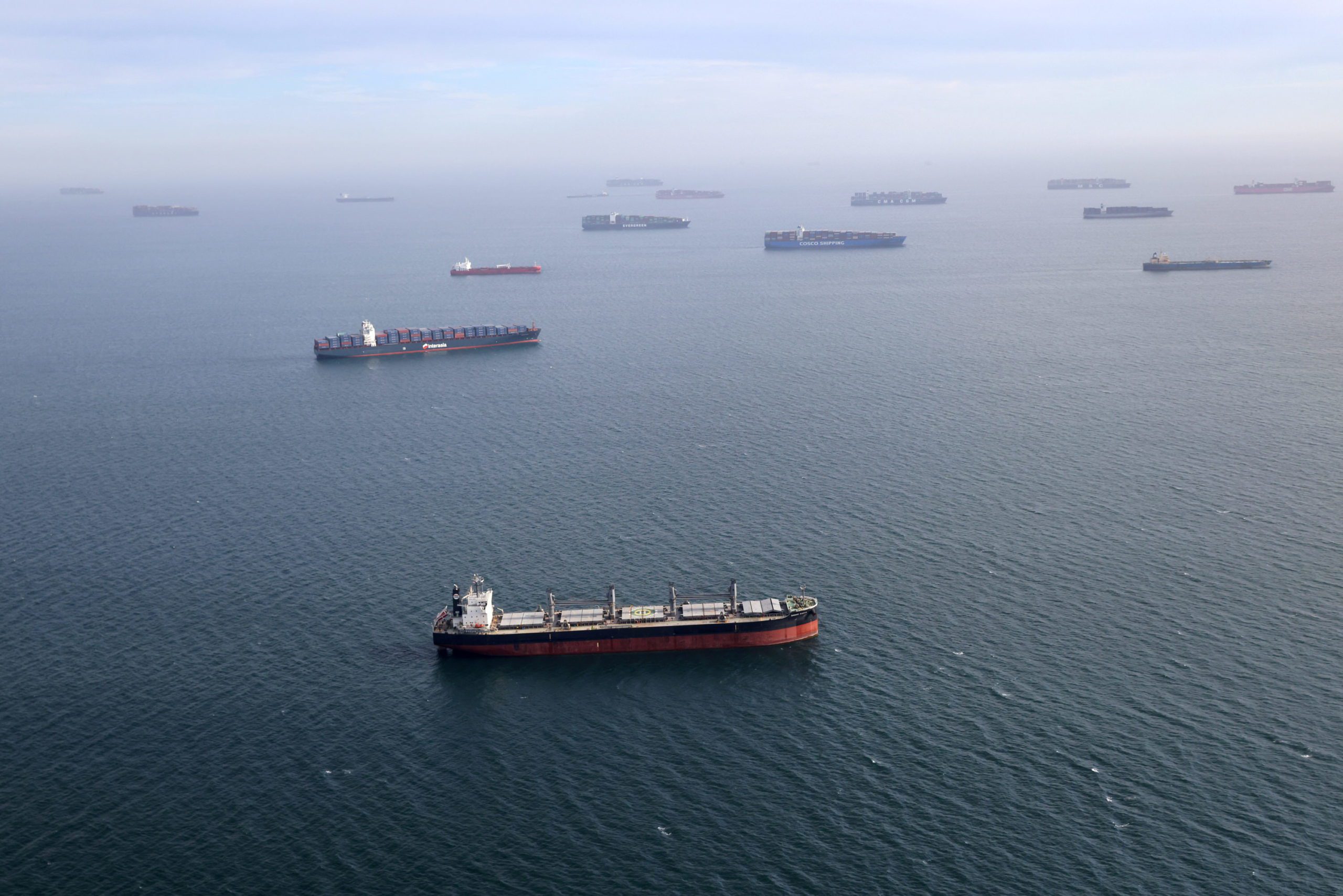
Global shipping is not running short of ships. The bigger problem is that a growing share of them are getting caught in congestion.
Roughly 12% of global container ship capacity is currently being absorbed by port congestion, the highest level in four years, according to C.H. Robinson’s October Edge Report.
The logistics provider said congestion is having an outsized impact across East Asia, Northern Europe and the Indian Subcontinent, reducing the amount of capacity that is actually available to shippers even as underlying vessel supply remains relatively healthy.
“Capacity may exist in the ocean network, but port congestion and steps the carriers are taking to get schedules back on track can change where and when that capacity is actually available,” C.H. Robinson said.
The result is an increasingly uneven ocean freight market heading into the fourth quarter.
Trans-Pacific services are dealing with capacity reductions around China’s October 1-7 Golden Week holiday, while India-North America services remain constrained by limited vessel space and disrupted connections through Colombo. Asia-Europe, meanwhile, is seeing softer pricing as underlying supply improves.
C.H. Robinson said schedule reliability has also deteriorated as congestion, vessel bunching, typhoons, conditions in the Middle East and Panama Canal restrictions ripple through carrier networks.
Recent typhoons in Asia have prompted some carriers to omit port calls, while congestion at major transshipment hubs is creating missed connections and longer cargo backlogs. Containers sitting at congested terminals also complicate the repositioning of empties to markets where they are needed.
That distinction matters because port omissions can be more disruptive than a planned blank sailing.
A shipper can generally account for a blank sailing before cargo leaves its origin. But when a carrier skips a port after the voyage is already underway, containers may have to wait for another feeder vessel, move through a different transshipment hub or be recovered through an alternative service.
The pressure is particularly visible on Asia-North America routes.
Space tightened ahead of Golden Week as exporters pushed cargo out before factories closed, while planned blank sailings are expected to reduce effective capacity through roughly mid-October. The first departures following the holiday could therefore face increased rollover risk as factories restart and export volumes return.
Whether that tightness lasts will depend largely on the strength of the post-holiday rebound.
A strong return in cargo volumes could keep preferred sailings full and support recent rate levels. A weaker rebound could allow space to normalize later in October.
The broader picture, however, is increasingly one of usable capacity rather than headline fleet capacity.
With more than one-tenth of global vessel capacity effectively caught up in congestion, shippers are having to pay closer attention to port selection, transshipment exposure, container availability and carriers’ ability to recover schedules when connections break down.

 Join The Club