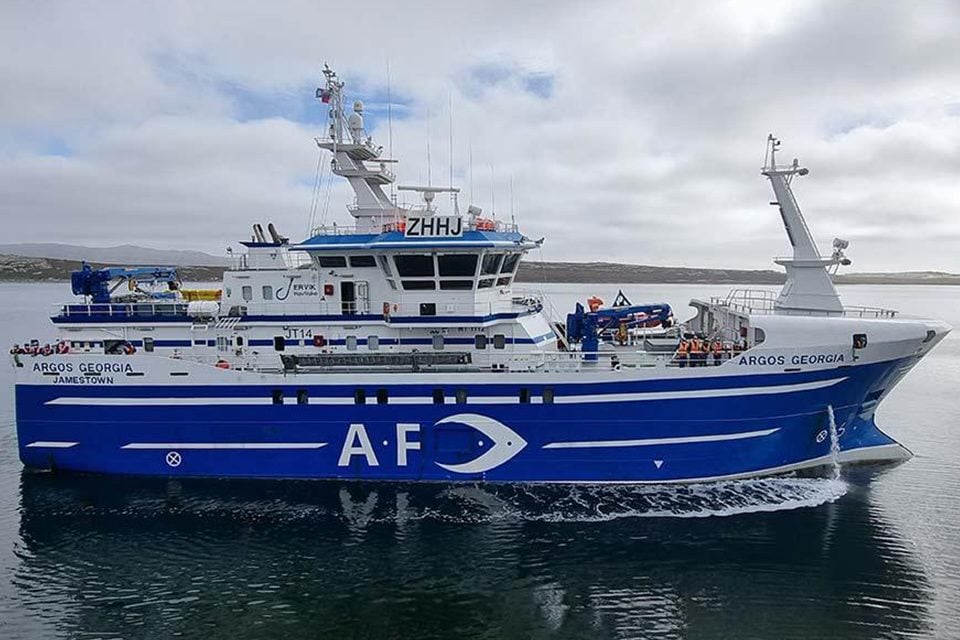
A line-hauling hatch that opened unexpectedly in heavy seas triggered the flooding and eventual sinking of the fishing vessel Argos Georgia off the Falkland Islands in 2024, killing 13 of the 27 people aboard, according to the UK Marine Accident Investigation Branch’s final investigation report.
The St Helena-registered longliner was sailing from Port Stanley toward fishing grounds near South Georgia on July 22, 2024, when its line-hauling hatch on the starboard side opened while the vessel was underway approximately 190 nautical miles east of Port Stanley.
Water poured into the line-hauling room and spread through other areas of the vessel, causing a growing starboard list that the crew was unable to control. Argos Georgia eventually foundered. Fourteen people survived.
The MAIB investigation found that the hatch’s manual securing mechanism had likely not been applied. Once the hatch opened, the crew was unable to close it.
Investigators also identified a previously unrecognized weakness in the hatch’s drive mechanism. The flooding was compounded by open weathertight doors and vulnerable electrical systems, while inaccessible manual controls made it more difficult to contain the flooding.
The final investigation also identified shortcomings in the emergency response. According to the MAIB, the crew’s response to the flooding was unstructured, while delays in declaring distress and abandoning ship reduced the time available for rescue.
Poor evacuation control, extreme weather and damage to the liferafts further increased the crew’s exposure to cold water.
“This was a tragic accident resulting in the loss of 13 lives,” Chief Inspector of Marine Accidents Rob Loder said. “Fishing in the remotest and most hostile parts of our oceans requires strict adherence to the maintenance of a vessel’s watertight integrity.”
Loder said that if a problem arises, “a quick, clear and efficient emergency plan should be executed,” adding that training and safety drills provide the best chance of survival in such extreme circumstances.
The investigation also found shortcomings in shoreside management by vessel operator Argos Froyanes Limited, including inadequate systems for controlling safety-critical risks and assessing, escalating and responding to flooding, abandonment and distress emergencies in severe weather and remote waters.
The MAIB recommended that the UK Maritime and Coastguard Agency amend its code for fishing vessels of 24 meters and longer to require shell doors to have automatic locking arrangements capable of securing them in the closed position.
Argos Froyanes Limited was recommended to implement a documented safety management system across its fishing vessels.
Investigators also recommended that the Falkland Islands government improve its maritime search and rescue communications capability so authorities can establish direct and reliable contact with vessels in distress within the Falkland Islands search and rescue area.
The MAIB conducted the investigation on behalf of the St Helena Government under the Category 2 Red Ensign Group Memorandum of Understanding.
Alongside the report, the MAIB published a safety flyer for the fishing industry highlighting lessons from the casualty, including the importance of maintaining watertight integrity and ensuring emergency procedures are understood and practiced.

 Join The Club