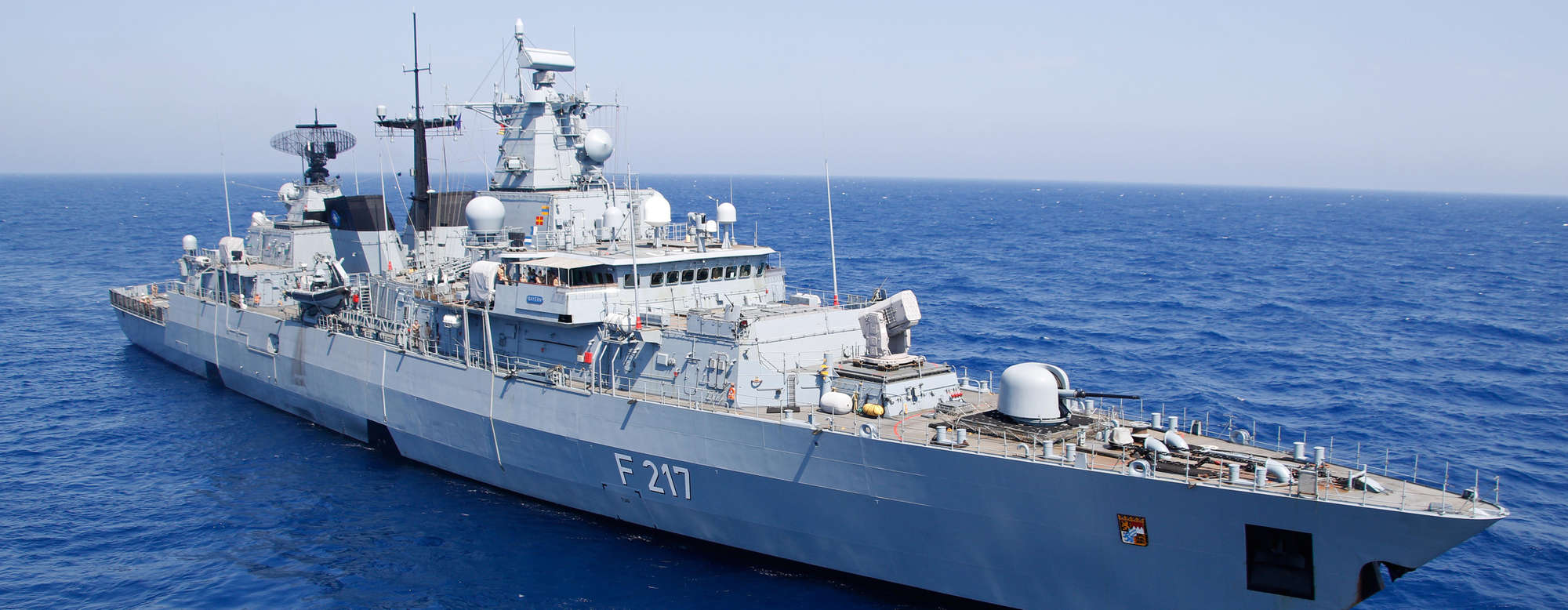
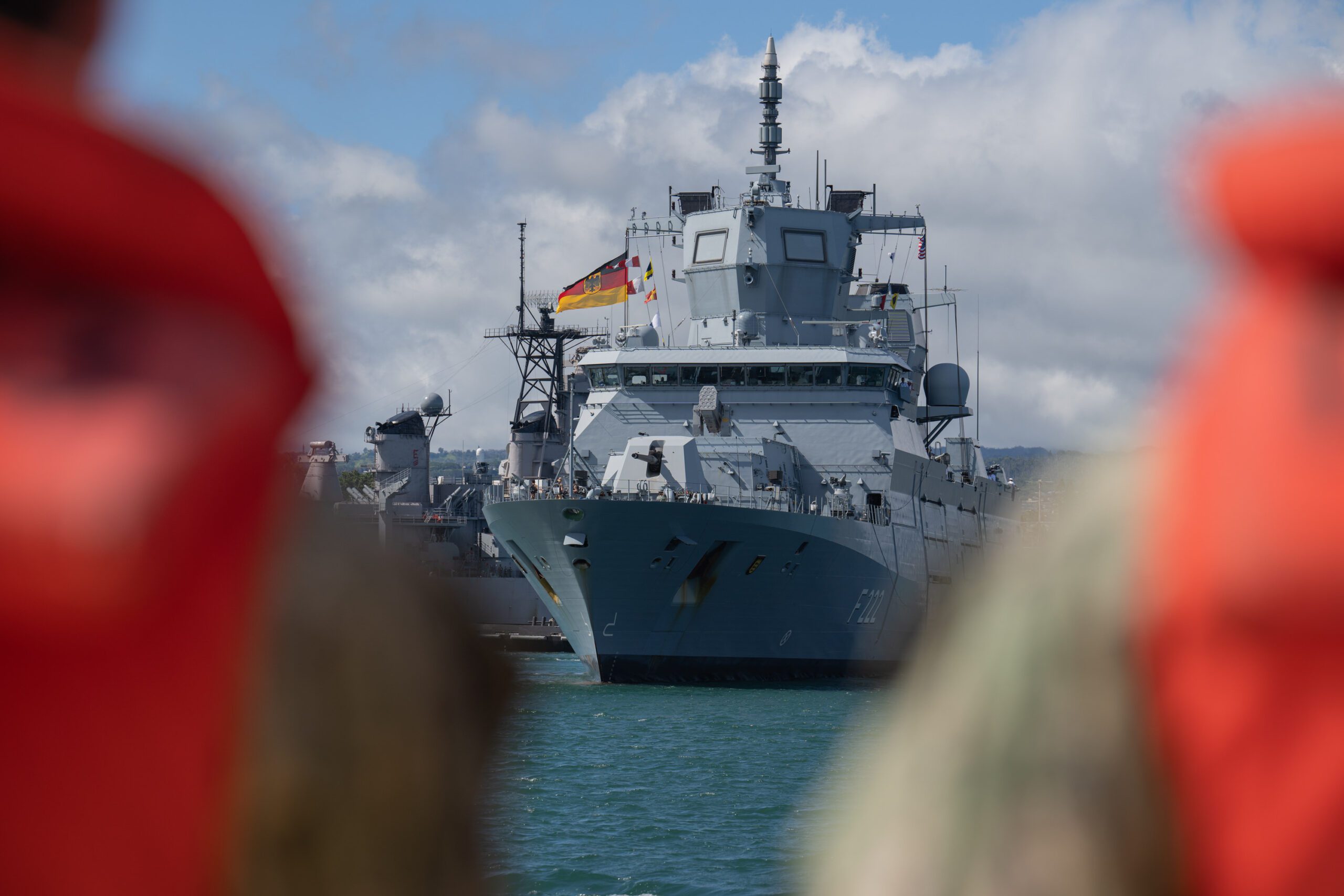
By Sabine Siebold (Reuters) Germany on Monday sent a warship to the South China Sea for the first time in almost two decades, joining other Western nations in expanding its military presence in the region amid growing alarm over China’s territorial ambitions.
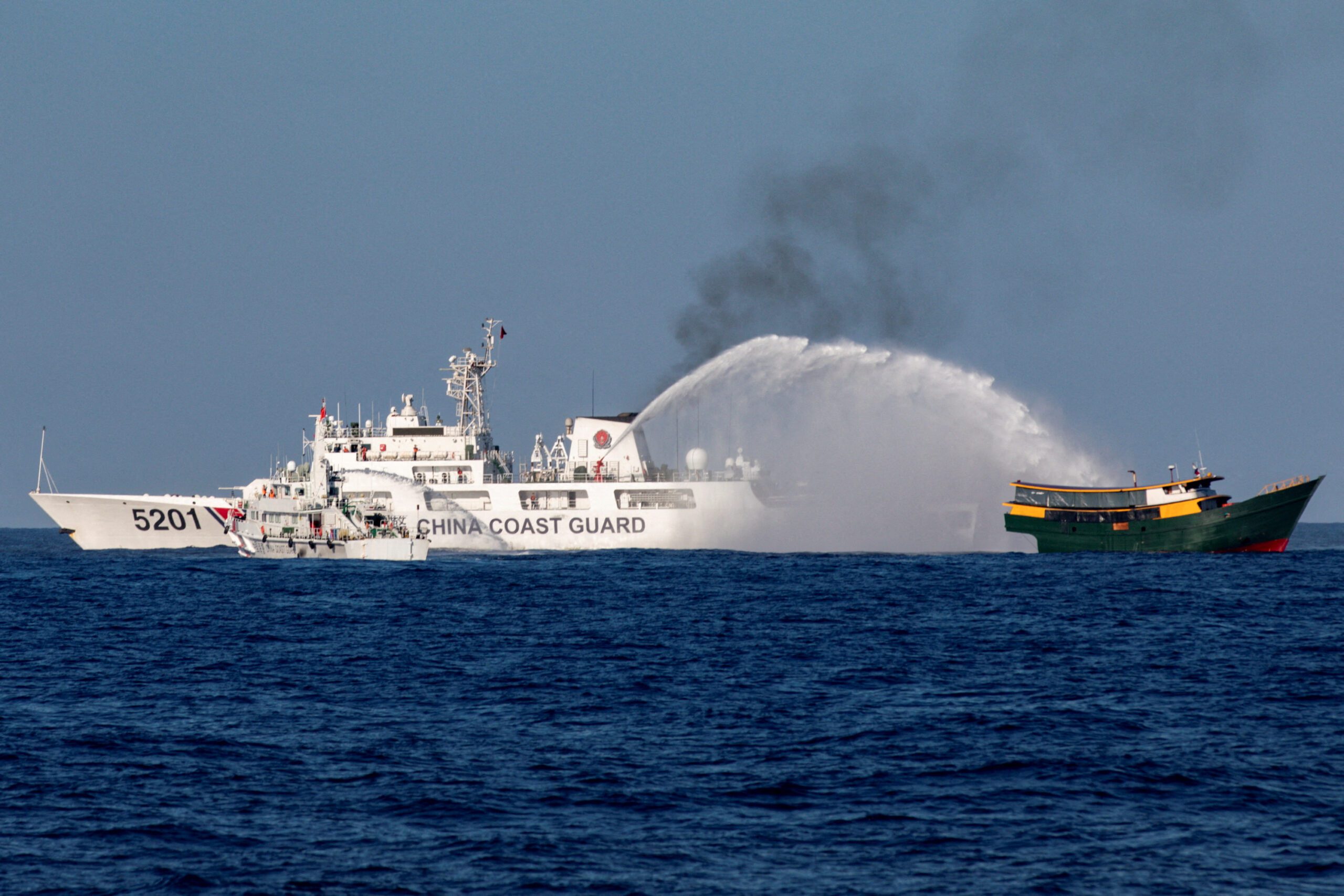
China claims swathes of the South China Sea and has established military outposts on artificial islands in the waters that contain gas fields and rich fishing.
The U.S. Navy, in a show of force against the Chinese territorial claims, regularly conducts so-called “freedom of navigation” operations in which their vessels pass close by some of the contested islands. China in turn objects to the U.S. missions, saying they do not help promote peace or stability.
Washington has put countering China at the heart of its national security policy and seeks to rally partners against what it says are Beijing’s increasingly coercive economic and foreign policies.
Officials in Berlin have said the German navy will stick to common trade routes. The frigate is not expected to sail through the Taiwan Strait either, another regular U.S. activity condemned by Beijing.
Nevertheless, Berlin has made it clear the mission serves to stress the fact Germany does not accept China’s territorial claims.
Germany is walking a tightrope between its security and economic interests as China has become Berlin’s most important trading partner. German exports there have helped mitigate the impact of the COVID-19 pandemic on Europe’s biggest economy.
German Defence Minister Annegret Kramp-Karrenbauer traveled to the port of Wilhelmshaven to see the frigate Bayern off on its seven-month voyage that will take it to Australia, Japan, South Korea, and Vietnam.
The vessel is expected to cross the South China Sea in mid-December, making it the first German warship to pass through the region since 2002.
“We want existing law to be respected, sea routes to be freely navigable, open societies to be protected and trade to follow fair rules,” Kramp-Karrenbauer said.
Countries including Britain, France, Japan, Australia, and New Zealand, have also been expanding their activity in the Pacific to counter China’s influence.
(By Sabine Siebold , Editing by Alison Williams, Reuters)
(c) Copyright Thomson Reuters 2021.
Sign up for our newsletter

 Join The Club