
 Join The Club


Building a Culture of Safety: Leadership, Accountability, and Workforce Commitment
In the ship repair industry, safety is more than a regulatory requirement or a box to check. It is a fundamental part of successful operations and a responsibility that must be reinforced throughout every level of an organization.
Shipyards are dynamic working environments where employees perform complex tasks involving heavy equipment, welding, fabrication, confined spaces, elevated work areas, and simultaneous operations across multiple vessels. Each project presents unique challenges, and work conditions can change throughout the day. Maintaining a safe working environment requires more than written procedures and compliance programs. It requires visible leadership, consistent accountability, and a commitment shared by every employee.
At Alabama Shipyard, employee safety is a core operational priority and an essential part of the company’s approach to workforce management and operational excellence.
Safety Starts with Senior Management
A strong safety culture begins with ownership at the senior management level. Leadership establishes the expectations, accountability, and organizational support necessary to make safety an integral part of daily operations. Without visible commitment and consistent support from senior management, employees may lack the confidence to raise concerns, challenge unsafe conditions, or exercise Stop Work Authority when necessary.
In a shipyard environment, where project requirements, work conditions, and operational priorities can change throughout the day, management must demonstrate that safety takes precedence in every operational decision. This commitment extends beyond establishing policies and procedures. It requires providing the resources necessary to support safe operations, reinforcing expectations through consistent communication, and holding all levels of the organization accountable.
Equally important is creating an environment where employees know they have the full support of management when exercising Stop Work Authority. Employees must feel empowered to identify hazards, communicate concerns, and stop work when conditions are unsafe without fear of reprisal or pressure to prioritize production over safety.
No schedule, production target, or project requirement should take precedence over employee safety. This expectation must be consistently demonstrated through leadership actions and reinforced throughout the organization.
Ultimately, safety cannot be delegated to a single department or individual. It requires ownership from senior leadership, accountability from supervisors, and active participation from the entire workforce.
Beyond Compliance: Making Safety Part of Daily Operations
Regulatory compliance provides the foundation for workplace safety, but an effective safety program must extend beyond meeting minimum requirements. In ship repair, maintaining safe operations requires continuous planning, communication, and coordination among shipyard personnel, vessel crews, subcontractors, and customers.
Pre-job safety meetings, employee training, routine inspections, and job hazard assessments are essential components of identifying and addressing potential risks before work begins. These practices are particularly important when managing simultaneous operations across multiple trades, coordinating hot work and confined-space activities, or adapting to changing vessel and worksite conditions.
Effective communication and coordination help ensure that employees understand the hazards associated with their work and the precautions necessary to perform it safely. Safety considerations must remain an active part of project planning and execution, rather than being addressed only when an issue arises.
A well-established safety culture benefits more than the workforce. Effective safety practices also support operational consistency, minimize disruptions, strengthen customer confidence, and contribute to the successful execution of complex vessel repair and maintenance projects.
Recognizing a Continued Commitment to Safety
Alabama Shipyard has established a strong record of safety performance and industry leadership, earning the Shipbuilders Council of America (SCA) Excellence in Safety Award for five consecutive years, most recently in 2026, and recognition as one of AEU’s Safety Award recipients in 2022.
These recognitions reflect more than industry achievement; they represent Alabama Shipyard’s ongoing commitment to protecting its workforce and making safety an integral part of every operation. Through leadership commitment, employee accountability, and continuous improvement, Alabama Shipyard strives to maintain a work environment where safety is a shared organizational responsibility.
While industry recognition is a significant accomplishment, the true measure of a successful safety program is the consistency with which safety expectations are upheld in daily operations. Senior management must establish clear expectations, demonstrate accountability, and provide the resources necessary to support safe operations. Equally important, employees must have the confidence and support to identify hazards, raise concerns, and exercise Stop Work Authority when necessary.
Ultimately, safety is measured not by awards or written policies, but by the decisions made and actions taken every day. It requires visible leadership, active workforce participation, and accountability at every level of the organization. Alabama Shipyard remains committed to fostering a culture where every employee is empowered and expected to take ownership of safety, look out for coworkers, and ensure that everyone returns home safely at the end of each shift.
Investing in People and the Future of the Maritime Industry
The future of the American maritime industry depends heavily on its ability to attract, develop, and retain a skilled workforce. As demand for domestic ship repair and maintenance continues to evolve, maintaining a qualified and safety-conscious workforce will remain a priority for shipyards throughout the country.
Workforce development extends beyond recruiting and hiring. Providing employees with the training, resources, and support necessary to perform their jobs safely and effectively is essential to building a sustainable workforce. Continued training helps employees adapt to evolving technologies, operational requirements, and industry standards, while experienced employees play an important role in transferring knowledge and reinforcing established safety practices.
Equally important is creating a workplace where employees feel valued, supported, and confident that their safety is a priority. Organizations that invest in employee development and maintain a strong commitment to workplace safety are better positioned to build an engaged and capable workforce.
At Alabama Shipyard, the workforce remains one of the company’s most important assets. Protecting employees, supporting their professional development, and reinforcing a culture of accountability are essential to maintaining the skilled workforce needed to support the maritime industry’s future.
A Commitment That Never Stops
Operational excellence is not achieved through a single initiative, policy, or industry award. It is built through consistent leadership, accountability, and a shared commitment to maintaining the highest standards of safety.
For Alabama Shipyard, protecting its workforce is an ongoing responsibility that extends across every department, project, and level of the organization. It requires senior management to lead by example, supervisors to reinforce expectations, and employees to remain engaged and accountable for their own safety and the safety of those around them.
As the American maritime industry continues to grow and evolve, the importance of protecting the people who maintain, repair, and sustain the nation’s fleet remains constant.
Because ultimately, successful shipyard operations begin with strong leadership, a committed workforce, and a culture where safety always comes first.
About Alabama Shipyard
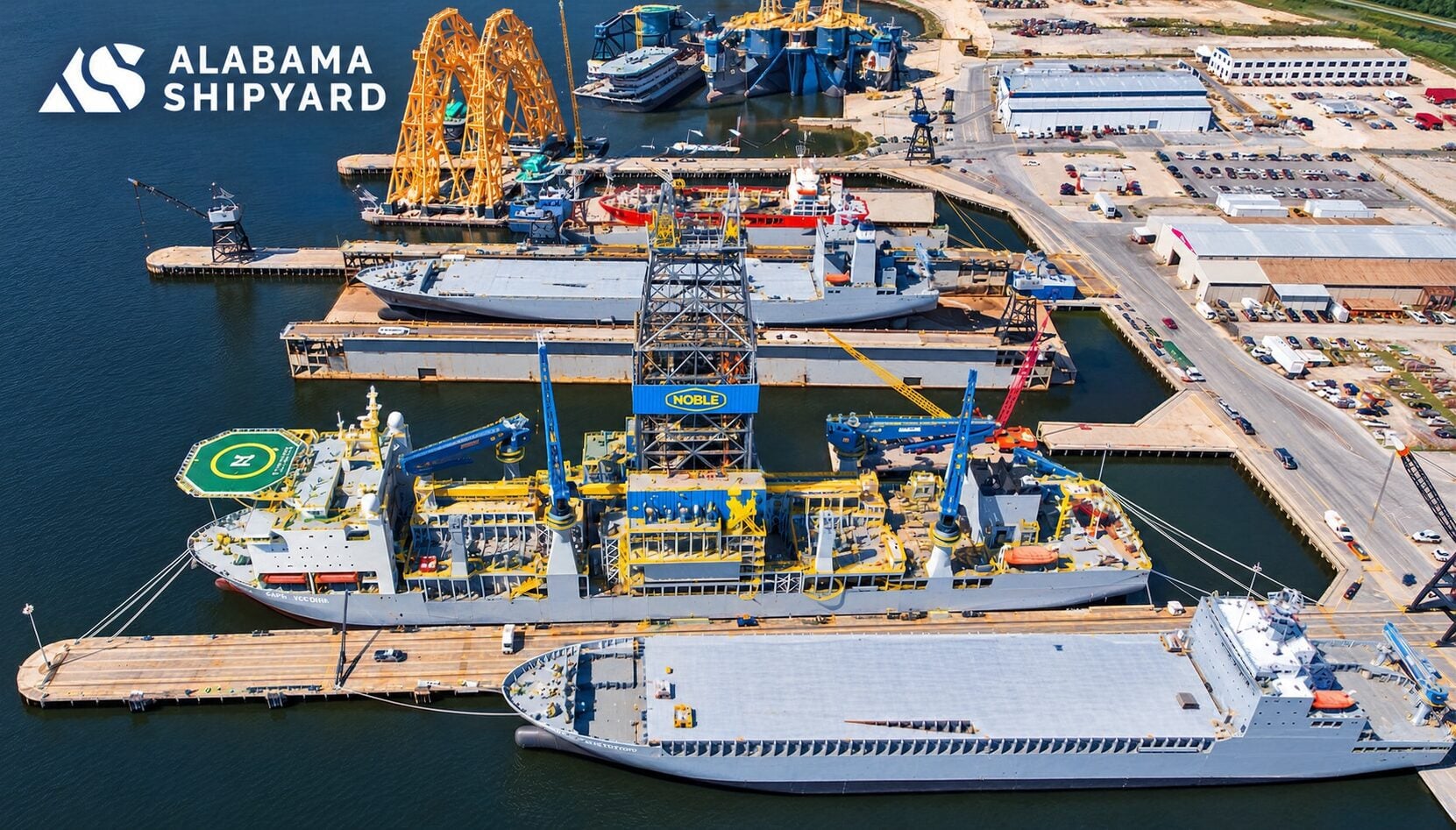
Alabama Shipyard is a full-service ship repair facility located in Mobile, Alabama. Established in 2018, the shipyard operates one of the largest floating dry docks in the Gulf region and offers deepwater access and extensive waterfront infrastructure to support large-scale and complex vessel maintenance, repair, overhaul, and conversion (MROC) projects.
To learn more about Alabama Shipyard and its capabilities, visit https://alabamashipyard.com.

Subscribe for Daily Maritime Insights
Sign up for gCaptain’s newsletter and never miss an update
— trusted by our 105,878 members
Stay Informed. Stay Connected.
Get The Daily Insights That Power Maritime Professionals Worldwide
Essential maritime and offshore news, insights, and updates delivered daily straight to your inbox
— trusted by our 105,878 members
Have a news tip? Let us know.
Get The Industry’s Go-To News
Subscribe to gCaptain Daily and stay informed with the latest global maritime and offshore news