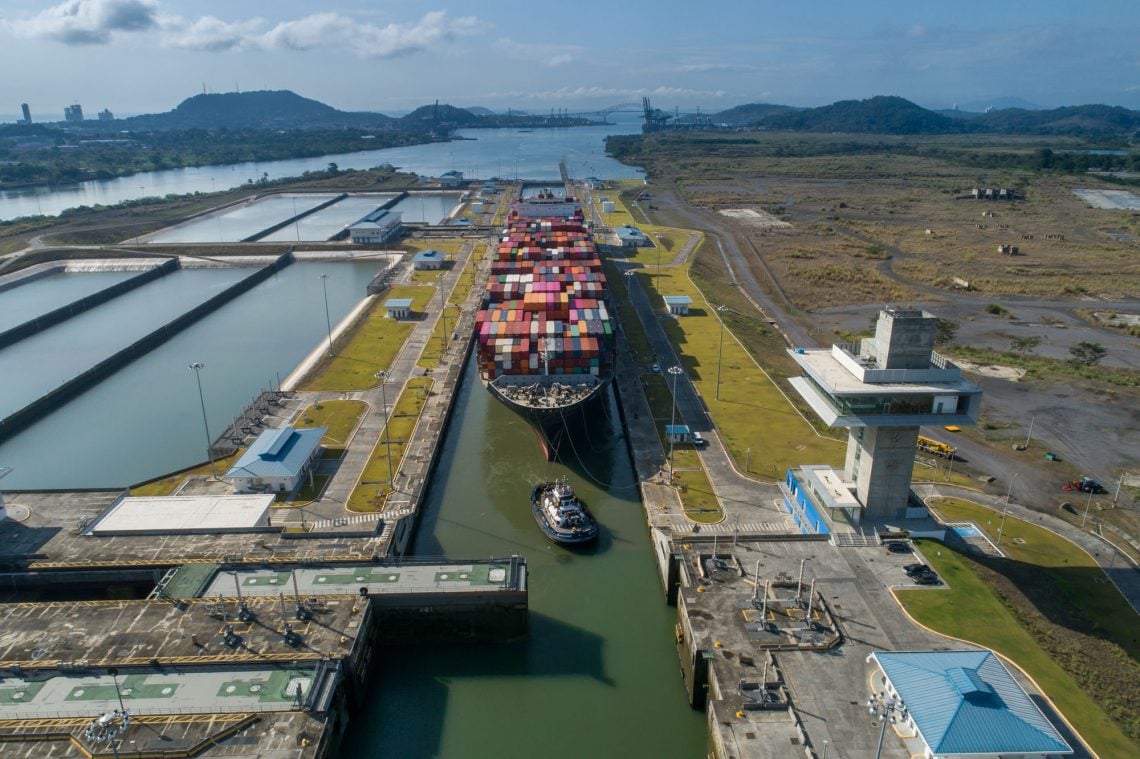
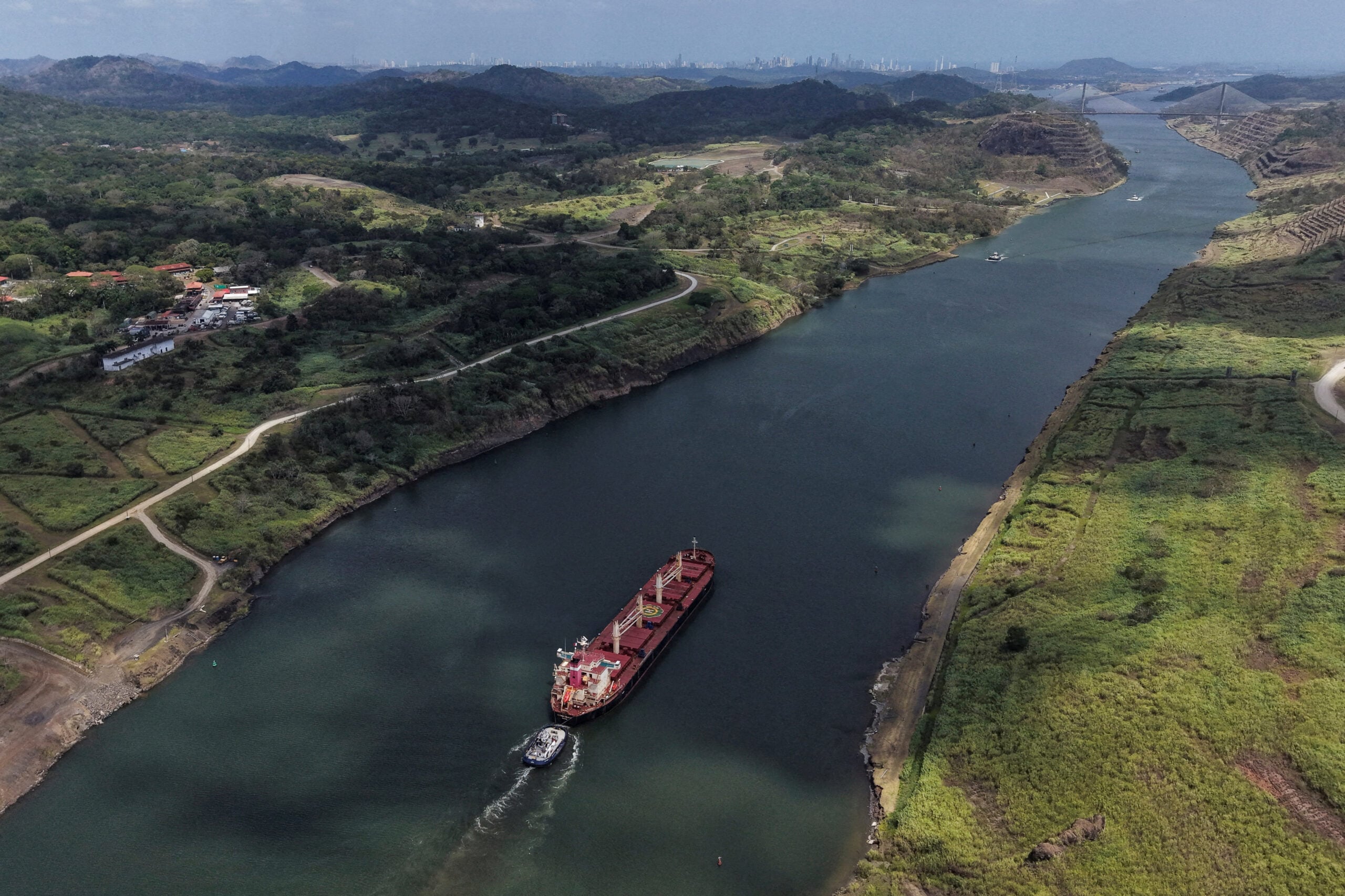
Competition for Panama Canal transit slots has surged, with as many as 18 vessels bidding for a single opening as more ships arrive without reservations
By Lori-Ann LaRocco – Key supply and demand data show the market pressures fueling the record auction prices at the Panama Canal.
In an expanded interview with gCaptain, Ricaurte Vasquez, Administrator of the Panama Canal Authority (ACP), said the number of vessels without an appointment to transit through the Panama Canal has increased from 10% to 20-25%.
“We are facing a significant number of vessels coming without reservation,” said Vasquez. “One of the lessons we learned from the previous (El Niño) event was that everyone must come and book (a reservation). So those who do not have a reservation wait, and most of them are the ones who pay high prices in order to get the (auction) slot.”
Vasquez explained the number of bidders per auction depends on the amount of auction slots available. Total slots per day are determined by water availability and any bookings in the Long-Term Slot Allocation System (LoTSA) that companies booked in advance and then canceled.
“Once the (auction) slot is open for the market, they start bidding and then the highest price wins,” said Vasquez. “The allocation has always followed market rules.”
In recent days, the auction rates have set back-to-back records. An auction slot was recorded at $5.3 million on Monday, surpassing the $4.6m bid the prior week. In March and April, auction slots increased to approximately $385,000. Before the war, auction slots ranged from $135,000 to $140,000.
“At the peak, we had 18 bidders for one slot,” said Vásquez. “That’s a lot. Normally you have two to three per day.”
That number of auction participants has steadily increased as the war with Iran drags on.
Tracking the bidders, in May-June, the average number was around 4 bidders per Neopanamax slot auction. In July, the ACP saw about eight bidders per day.
Vasquez tells gCaptain that for the Neopanamax locks in August, the ACP had up to 15 bidders for one slot. The overall average for the month so far is 6 bidders.
For the Panamax locks from April to August, Vasquez told gCaptain the ACP had over 8 bidders per day, and one auction in May had 18 bidders. The average from October to March was around 2 bidders per day.
This data shows the demand behind the bids.
When asked whether the Trump Administration has commented on these record auctions and fees to transit, Vasquez said they are being transparent.
“We have communications with everyone,” he said. “We have the local press releases. We have international press releases. These are vessels that did not have a slot. They came and waited, and when the slot opened, they bid for it, and they bid against each other. We do not set prices; the market sets the price.”
In the past, U.S. President Donald Trump has called Panama Canal transit fees “exorbitant” and a “ripoff” and threatened to take over the Canal.
After the historic El Niño of 2023, the ACP instituted a daily transit auction system in 2024 and recently amended it to LoTSA. The ACP also created a dedicated booking system for Liquefied Natural Gas (LNG) vessels. Other options included the auction mechanism and last-minute reservations.
Three auction slots are reserved daily to accommodate segments like LPG and LNG that need space on short notice. Auction slots are up for the highest bidder to secure transit. Canceled bookings can be added to the auction slots. This can increase the daily availability by 3-5 slots.
Now, with vessel transit cuts announced for September, prices for any auction slots will surely go up.
The fees associated with traversing the Panama Canal have led some ocean carriers to increase “Panama Canal Surcharges” or pull some vessel strings and redirect to other routes.
One carrier that has eliminated three routes is ONE. Clients of ONE tell gCaptain they received an alert from the ocean carrier on the measures. gCaptain has reviewed the alert. When asked about the vessel string cancellations, Vasquez said they met with ONE executives Monday evening.
“They understand the situation,” said Vasquez. “They have to redeploy. They have to deliver cargo on time, and they have to do whatever they need to do. We have rules and regulations that apply to everyone, and then we sit with them and say, okay, how about if you do A, B, and C? You can bring a larger vessel. You can do transferring at this place. The slots are available, so you look at what you want to schedule. Being transparent (on options) is critical to us.”
The Panama Canal reported growth in vessel traffic, tonnage and revenue in fiscal year 2026, as stronger demand from energy carriers and containerships helped lift volumes despite ongoing concerns over...
For a sign of just how extraordinary oil shipping costs have become, consider this: It’s now more expensive to hire a tanker from the US to China than to launch a rocket into space.
Maritime traffic through the Strait of Magellan jumped more than 70% both in August and September from year-ago levels as ships diverted from the drought-stricken Panama Canal, Chilean Navy data requested by Bloomberg show.
October 7, 2026
Total Views: 2280
Get The Industry’s Go-To News
Subscribe to gCaptain Daily and stay informed with the latest global maritime and offshore news
— just like 106,391 professionals
Secure Your Spot
on the gCaptain Crew
Stay informed with the latest maritime and offshore news, delivered daily straight to your inbox
— trusted by our 106,391 members
Your Gateway to the Maritime World!
Essential news coupled with the finest maritime content sourced from across the globe.

 Join The Club