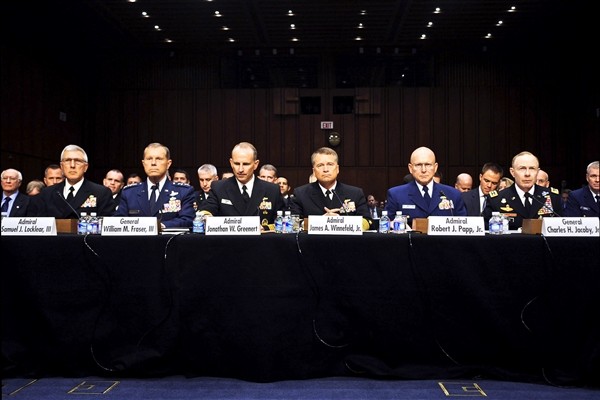
Flag officers testify on the Law of the Sea before the Senate Foreign Relations Committee in Washington, D.C., June 14, 2012. DOD photo by U.S. Air Force Sgt. Chuck Marsh
By Elisabeth Ferland
The military, business leaders, environmentalists, and labor groups all support the ratification of the U.N. Convention on the Law of the Sea (UNCLOS). In testimony to the Senate Foreign Relations Committee, Navy Adm. James Winnefeld Jr. spoke in favor of accession to UNCLOS, saying that the Treaty will protect U.S. access to the maritime domain, fortify U.S. credibility as the world’s leading naval power, and will allow the United States to bring to bear the full force of its influence on maritime disputes. Despite widespread support for accession to UNCLOS there remain opposition from a vocal conservative minority of purported defenders of U.S. sovereignty.
Three of the arguments commonly cited by opponents of U.S. accession to UNCLOS are an erosion of U.S. sovereignty, U.S. vulnerability to lawsuits and loss of economic revenue, and a redundancy in accession. The Treaty has created the International Seabed Authority (ISA) with its own dispute resolution tribunal. Despite the presence of the ISA, retired Admiral James Lyons highlighted that accession to the Treaty has not prevented China from undertaking illegal maritime claims in the South China Sea. Because China illegally lays claim to the entire South China Sea, UNCLOS is not applicable in this case in their opinion, rendering ISA incapable of action.
Admiral Lyons also said that U.S. accession to UNCLOS would have a negative effect on legitimate U.S. naval operations because the Treaty gives other nations access to its mandatory dispute-resolution mechanisms. Because submersible vehicles need to navigate on the surface in territorial waters, anti-submarine warfare operations could have serious negative impacts. Opponents believe that accession to the Treaty would have a negative impact on the United States’ ability to carry out legitimate naval operations, undermining U.S. maritime supremacy.
Second, accession to UNCLOS could open the U.S. to lawsuits over virtually any maritime activity, including alleged pollution of the maritime environment either through land-based activities or through the environment. Despite lack of merit, the U.S. would have to defend itself against any of the lawsuits, at the expense of the taxpayer. Finally, any decision by the UNCLOS tribunal would be final, could not be appealed, and would be enforceable in U.S. territory.
Alongside the possibility of lawsuits, U.S. accession to UNCLOS would bind the U.S. to transfer royalties from hydrocarbon production to the ISA for redistribution to developing and landlocked countries. As the amount of hydrocarbon royalties could be in the trillions of dollars, the amount that the Treasury would have to give the ISA would not be inconsequential. However, the U.S. does not need to accede to UNCLOS to gain the rights to the hydrocarbon resources, because international law and U.S. policy and practice have already given U.S. jurisdiction and control over its extended continental shelf (ECS). Therefore accession would deprive the U.S. of revenue it already has the right to.
Last, the U.S. already honors most of the provisions contained in UNCLOS and it is therefore simply not necessary for the U.S. to ratify the Treaty. Practically, there is no pressing issue requiring ratification that outweighs the binding negative impacts of the Treaty. As the preeminent naval power, the U.S. does not need to be bound by the articles of the Treaty for fear of a rising challenger, and as it already honors most of the provisions, the need is just not there.
Despite strong support for accession to UNCLOS the potential negative impacts of the Treaty for the U.S. are not insignificant and have succeeded thus far in the Senate failing to gain the two-thirds majority needed for its ratification.
Elisabeth Ferland is a recent graduate of the accelerated bachelor and master program in Georgetown University’s School of Foreign Service. Her bachelor’s degree is in Science, Technology, and International Affairs and her master’s is in Security Studies. She is currently looking to begin a career on Capitol Hill. Having grown up in Europe she loves to travel, have adventures, and try new things. She can be reached at [email protected]
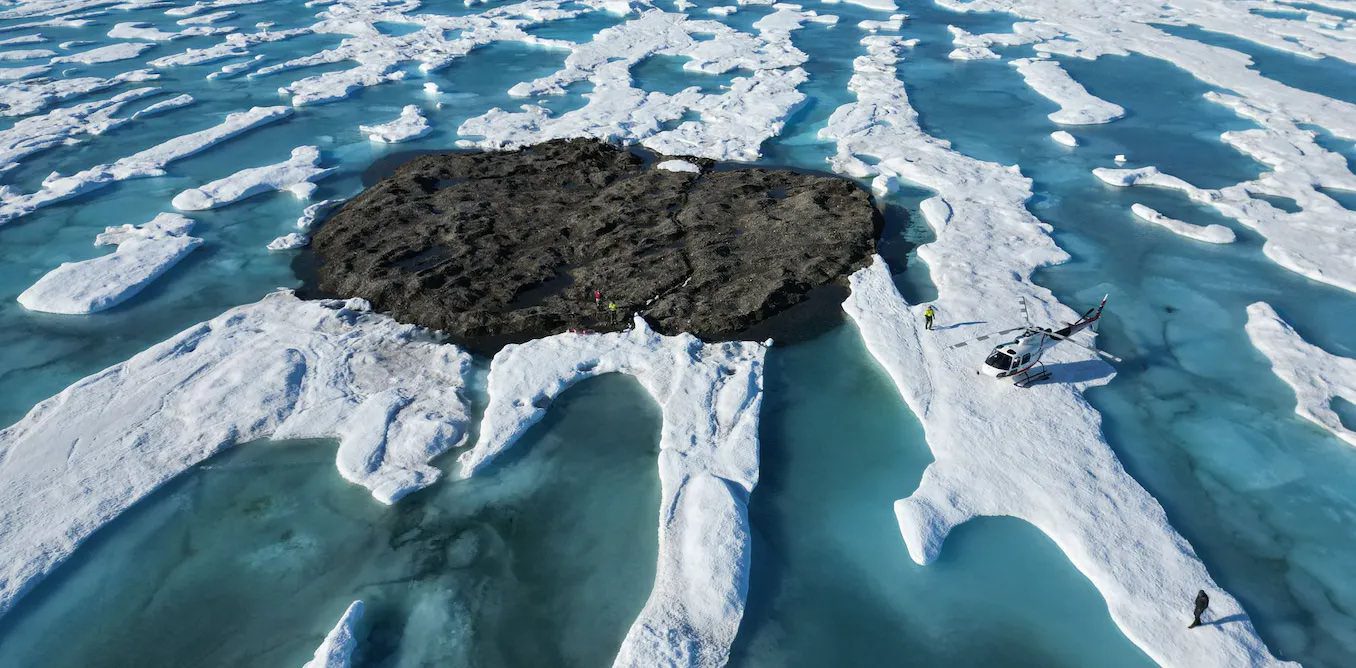
by Kevin Hamilton (University of Hawaii) In 2021, an expedition off the icy northern Greenland coast spotted what appeared to be a previously uncharted island. It was small and gravelly,...
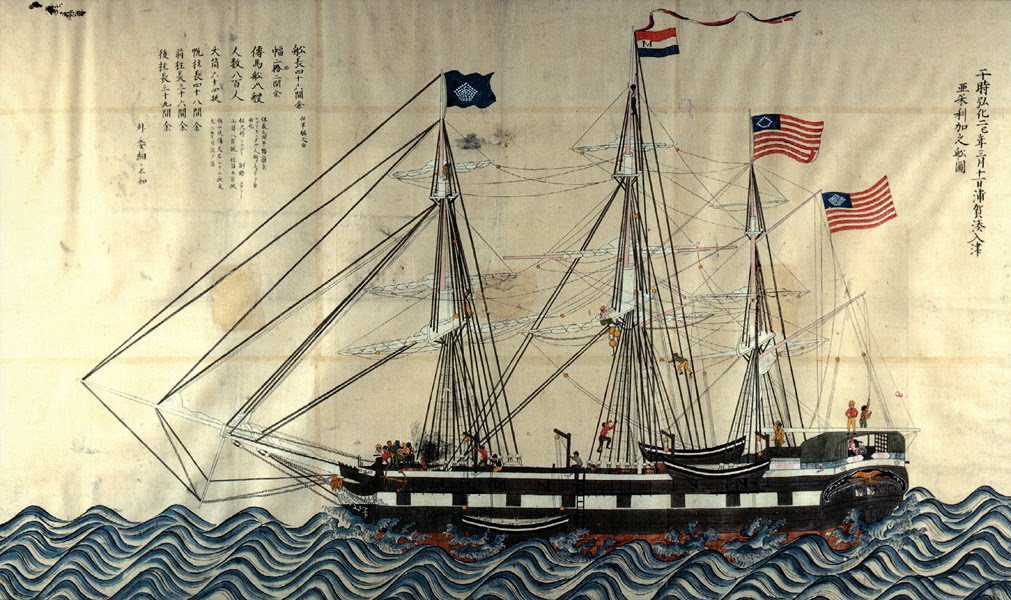
Editor’s Note: This article was originally published by gCaptain in 2016 and is being republished now because it’s lessons are timeless and possibly more relevant in 2022 as today’s ships...
by Salvatore R. Mercogliano, Ph.D. (gCaptain) This Veteran’s Day we remember the thousands of Soldiers, Sailors, Marines, Airmen, and Coast Guardsmen who gave their lives in defense of the United States...
November 11, 2022
Total Views: 1533
Why Join the gCaptain Club?
Access exclusive insights, engage in vibrant discussions, and gain perspectives from our CEO.
This website uses cookies to improve your experience while you navigate through the website. Out of these, the cookies that are categorized as necessary are stored on your browser as they are essential for the working of basic functionalities of the website. We also use third-party cookies that help us analyze and understand how you use this website. These cookies will be stored in your browser only with your consent. You also have the option to opt-out of these cookies. But opting out of some of these cookies may affect your browsing experience.
Necessary cookies are absolutely essential for the website to function properly. This category only includes cookies that ensures basic functionalities and security features of the website. These cookies do not store any personal information.
Any cookies that may not be particularly necessary for the website to function and is used specifically to collect user personal data via analytics, ads, other embedded contents are termed as non-necessary cookies. It is mandatory to procure user consent prior to running these cookies on your website.

 Join The Club