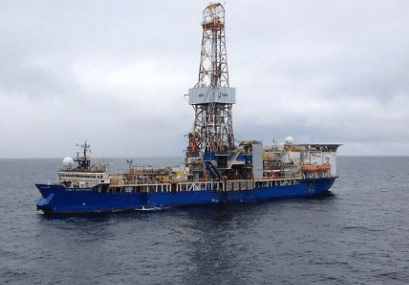
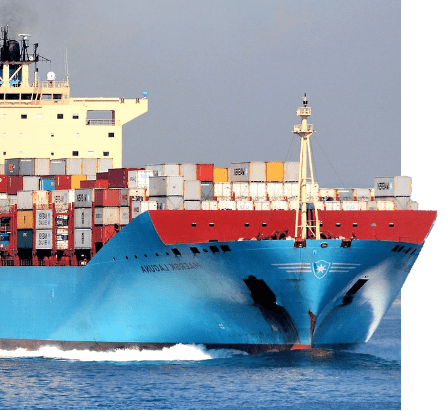
The Noble Discoverer drillship.
By Kristin Jones
Noble Corp.’s (NE) fourth-quarter earnings were roughly flat from a year earlier as the offshore-oil driller’s higher revenue from contract drilling services was offset by repair costs and other operating expenses.
Noble has been investing billions of dollars in fleet upgrades over the past year as worldwide drilling activity accelerates, but the company said Wednesday that the effort has been rocky.
“A company transformation as extensive as we are undertaking can be challenging, and as we saw in the fourth quarter, can produce inconsistent operating performance,” said Chief Executive David Williams.
While the company added three drillships to its fleet, and put two others in service following upgrades, “initial operations on these five rigs have not been as seamless as we had hoped, particularly with respect to certain critical components,” Mr. Williams said, noting downtime attributed to the rigs.
Noble said in December that a U.S. Coast Guard inspection found issues with several components and systems on its Discoverer drillship, including with its safety-management systems.
Also last month, one of the offshore rigs managed by Noble made its way into U.S. news headlines when it ran aground in Arctic waters after breaking free from tow ships. Royal Dutch Shell PLC(RDSA, RDSB) was using the rig, The Kulluk, to drill exploratory wells off Alaska’s northern coast.
The company reported a profit of $127.6 million, up slightly from $127 million a year earlier. On a per-share basis, earnings were flat at 50 cents. Revenue increased 29% to $966.4 million.
Analysts polled by Thomson Reuters were expecting per-share earnings of 61 cents on revenue of $958 million.
Revenue from contract drilling services, the primary top-line contributor, climbed 28% to $921.6 million due to an increase in operating days.
Operating expenses rose 27%, as the costs associated with drilling services jumped due to the greater utilization and repair and maintenance costs.
Average dayrates across the company’s fleet were up 3%.
Noble’s contract backlog as of Dec. 31 rose to $14.3 billion, up from $13.7 billion a year ago.
Shares closed Wednesday at $39.85 and were unchanged in after-hours trading. Through the close, the stock was up 11% in the past six months.
(c) 2013 Dow Jones & Company, Inc.
Unlock Exclusive Insights Today!
Join the gCaptain Club for curated content, insider opinions, and vibrant community discussions.

 Join The Club