DAILY BLOG. About ships.

gCaptain.com

A Blog About Ships


Sailor, Mariners, seafarers and to whom it may concern. Cosco Busan Pilot Charged

March 20th, 2008 · Comments


Sailor, Mariners, seafarers and to whom it may concern

by Captain John Denham

The Department of Justice has submitted “information relative to a criminal action ” in U.S. District Court in San Francisco, California; an accusation against a mariner for violating The Clean Water Act and The Migratory Bird Treaty Act. As a criminal case it will be processed not in Admiralty, but in criminal court, where there is a more relaxed and lesser general acceptance for technical qualification and terminology. The urgency in this priority matter may be a limitation in the Statutes or they are not very busy at DOJ. However it should be noted this an accusation for violating two acts, not an allision between a ship and a fixed object. Shaft alley lawyers, don your caps and peruse.

The defendant, JOHN JOSEPH COTA, did negligently (failed to act as a reasonable person might do in similar circumstances) cause (personally did) the discharge of oil in such quantities as may be harmful from a vessel, the M/V Cosco Busan, into and upon the navigable waters of the United States, without a permit. (Can one discharge oil with a permit?) Specifically, on or about November 7, 2007, Defendant Cota, while piloting the M/V Cosco Busan,(it has not been proven that at the time he was directing the navigation and movement of the vessel) caused approximately 58,000 gallons of heavy fuel oil to be discharged from the vessel into San Francisco Bay by acting in a negligent manner,(Supra) that included the following: (a) failing to pilot a collision free course (Supra; made it safely from Oakland to buoy #1); (b) failing to adequately review with the Captain and crew (all of them?) of the M/V Cosco Busan prior to departure the official navigational charts of the proposed course, (only one route out of Oakland) the location of the San Francisco Bay aids to navigation,( not reported as yet; only 18 aids not including bridge) and the operation of the vessel’s navigational equipment; (c) departing port in heavy fog ( term has no professional meaning: although reported as .1 mile) and then failing to proceed at a safe speed (too may variables and special circumstances involved) during the voyage despite limited visibility; (d) then failing to use the vessel’s radar (operational ability unresolved) while making the final approach to the Bay Bridge; (e) failing to use positional fixes during the voyage; and (f) failing to verify the vessel’s position vis-a-vis other established and recognized aids to navigation throughout the voyage. 33CFR164.11 “The owner master or person in charge shall ensure that: (a) the wheelhouse is constantly manned by persons who: (2)Fix the vessel’s position.”

All alleged in violation of Title 33, United States Code, Sections 1319(c)(1)(A) and 1321(b)(3), a Class A misdemeanor. Reviewing the above it is obvious that owners, masters and person in charge of vessels should make all employees aware of the possibility of enforcement by government of these acts, The media has correctly expressed, “they intend to make examples.” The courts, including those selected as jurors , under instruction, will expect a high professional standard of performance of licensed and documented mariners, seafarers and private boaters. It is possible with a proper defense, one may escape penalty, but the experience is devastating and costly.

This article was written by Captain John Denham, a veteran of 66 years maritime experience in seamanship, ship handling, navigation, piloting, and education. He is also author of The Assistant and DD 891.

_______________

The following is the documented federal charges against Cosco Busan pilot John Cota. [Continue Reading →]

CommentsTags: · , , , , , , ,

Criminal Charges filed against Cosco Busan Pilot

March 17th, 2008 · Comments

AP Photo: The damaged Cosco Busan is seen in Oakland, Calif., on Saturday, Nov. 10, 2007

The Associated Press is reporting that criminal charges were filed today against Capt. John Coda in the Cosco Busan allision with the San Fransisco Bay Bridge, back in November 10, 2007.

Here’s an excerpt:

Capt. John Cota could face up to 18 months in jail and more than $100,000 in fines if convicted of the misdemeanor charges, which include harming migrant birds protected by the government and violating the Clean Water Act. Cota was not taken into custody, according to court papers.

The complete post is HERE.

___________________________

This post was written by Richard Rodriguez, Rescue Tug Captain, and US Coast Guard approved instructor for License Training. You can read more of his articles at the BitterEnd of the net.

CommentsTags: · , , , ,

San Fran - “Over 100 liable for COSCO BUSAN Oil Spill”

February 29th, 2008 · Comments

The following post is written by Fred Fry:

This is from the 13 December 07 Haight’s Maritime Items email newsletter:

San Francisco sues everyone re oil spill - The Office of the City Attorney issued a press release stating that it filed suit under state law against parties allegedly responsible for the November 7 oil spill in San Francisco Bay. In addition to financial compensation, the suit seeks an injunction requiring defendants to implement a plan to assess, monitor, and remediate all damages caused by the spill. Defendants include the owner, operator, manager, pilot, and John Does 1-100. (12/10/07). - Dennis Bryant

You can find a copy of the lawsuit here. (Direct Pdf link here)

He’s not kidding when he says that they are suing everyone. Of note is this comment about 100 John Does who the City of San Francisco also named as defendants:

14. The true names or capacities, whether individual, corporate, associate, or otherwise, of DOE I through DOE 100 are unknown to plaintiffs, who therefore sue such defendants by such fictitious names, and who will amend this complaint to show their true names and capacities when ascertained. Plaintiffs are is informed and believe and thereon allege that each of the defendants designated as a DOE is responsible in some manner for the wrongs herein referred to and thereby proximately caused injuries and damages as alleged herein. - Link (page 7)

Do they really think there are over 100 people responsible for this spill? Who knows, at least the lawyers think that it is possible. You can bet that they will target specific shoreside support staff in addition to members of the crew with that many empty spots to fill. It will be interesting to see who they name, considering the international call not to criminalize seafarers. The pilot so far is the only person named in the suit.

NOTE: As of the time of posting, the City has yet to name any of the 100 John Does. So there are a good number of people out there who are being sued, they just don’t know it yet, for sure.

This was originally posted on my Blog Fred Fry International on 13 December 2007.

CommentsTags: · , , , ,

Rubbish Soup - Plastic At Sea

February 7th, 2008 · Comments

Plastic At Sea - Rubbish Soup

Bitterend found this great image of so called “Rubbish Soup”. They tell us;

“The vast expanse of debris – in effect the world’s largest rubbish dump – is held in place by swirling underwater currents. This drifting “soup” stretches from about 500 nautical miles off the Californian coast, across the northern Pacific, past Hawaii and almost as far as Japan.” “The UN Environment Programme estimated in 2006 that every square mile of ocean contains 46,000 pieces of floating plastic.”

Click the image for the full sized version, click HERE for an alternate version then view the related article HERE.

Thanks Richard!

CommentsTags: · , , , ,

Independent Panel Releases Report on Cosco Busan

January 31st, 2008 · Comments

San Francisco, CA (28 January): A panel of outside experts formed by the commandant of the Coast Guard to study the response to the Cosco Busan oil spill today released the first of two reports it was chartered to produce. The 120-page ‘Phase I’ report looks at the first two weeks of response operations that unfolded in the wake of the Nov. 7 incident. A second report on the entire cleanup operation is due in several months.

The panel was not tasked with determining the cause of the incident and the report deals only with preparedness and response to the spill. The report contains 59 recommendations related to preparedness, and 79 aimed at improving response operations. These range from relatively simple ideas, such as making oiled wildlife reporting hotlines easier to access, to changes in spill response operations and research on remote sensing technology for detecting spills in low visibility conditions.

Click HERE to continue reading this article at Maritime Executive or view the official Report HERE.

CommentsTags: · , , , ,

Alaska Oil Spill - M/V Dolphin

January 18th, 2008 · Comments

Triton Seafod Ship Dolphin Spilling Oil in Alaska

Seattle based Trident Seafood’s 175′ freighter Dolphin with 34,000 gallons of diesel aboard grounded south of Wrangel AK. Dolphin spilled an unknown amount of fuel.

The Juneau Empire story is HERE and video news coverage HERE.

Thanks to BitterEnd for the find!

CommentsTags: · , , , , ,

South Korea Tanker Incident - Video

December 8th, 2007 · Comments

.

Video of the Oil Spill In South Korea.

Video not working in your browser? Try the direct link.

CommentsTags: · , , , , , , , , , , , ,

South Korea Tanker Incident - 81,000 barrel oil spill

December 7th, 2007 · Comments

Oil Tanker Hebei Spirit
Click Photo For Details

Bloomberg News tells us:

South Korea - Tanker SpillSouth Korea’s coast guard sent boats to contain the country’s biggest oil spill in more than a decade after a Hong Kong-registered supertanker collided with a barge.

About 81,000 barrels of crude oil was spilt after a crane on the barge crashed into the Hebei Spirit at 7:15 a.m. local time, Jeong Seon Mun, deputy director of the maritime safety information center at South Korea’s Ministry of Maritime Affairs & Fisheries, said. The ship was anchored 5 miles (8 kilometers) northwest of the Taean peninsula at the time.

The leak is almost a third of the 37,000 tons spilled into Prince William Sound, Alaska, by the Exxon Valdez in 1989, according to data on the International Tanker Owners Pollution Federation’s Web site. The Taean Coast Guard deployed 12 patrol boats and 3 accident control vessels, Jeong said today.

“Oil is still spilling,” Jeong said by telephone in Seoul. “The police face difficulty in carrying out the operation because high waves make it hard to contain the spill.” Continue Reading…

CommentsTags: · , , , , , , , , , , , ,

Cosco Busan Crew Remain Silent During NTSB Interview

November 16th, 2007 · Comments

In other news The San Jose Mercury News tells us;

The International Maritime Organization saw the Cosco Busan oil spill coming: Last year, it banned new ships from being built with their fuel tanks along the hull beginning in 2010.
In effect, the U.N. agency determined that increasingly large, fast ships that carry as much fuel as a small oil tanker should not carry that fuel along the side of the vessel, directly behind a single-layer hull.
One UC-Berkeley engineering professor compared the design to the Ford Pinto, the 1970s car that gained a reputation for gasoline tanks that could explode in rear-end accidents.
“I think the Pinto is the perfect example,” said Bob Bea, who is also a former oil tanker captain. “We need to recall them and retrofit. Put them (fuel tanks) inside.”

Built in 2001, the Cosco Busan is among the growing number of bigger, faster container ships that have “winged tanks” - fuel tanks arrayed along the sides of the ship.
The IMO convention, adopted in March 2006, requires that by 2010 all new ships with an oil fuel capacity of 600 cubic meters or more must have their fuel tanks deeper inside the ship and behind two walls. That rule affects most large commercial ships, and would have affected the Cosco Busan.
Bea said few are aware of the action taken by the London-based IMO, even within the shipping industry, because the licensing bodies that put those regulations into effect have yet to write and distribute information about it.

The IMO convention applies only to new ships, or those that undergo major modifications. It does not phase out winged tanks, meaning it is likely that container ships with winged tanks will be around for decades.
“We have a fleet full of those damn things out there, and they are exposed and so are we,” Bea said.
The Cosco Busan is capable of carrying 5,500 20-foot containers, about half the capacity of the world’s largest container ships, which carry the equivalent of trains 70 miles long across oceans at 25 knots, or about 30 miles per hour. Continue Reading…

To follow gCaptain’s coverage of the incident CLICK HERE.

To view a photo slideshow of the incident CLICK HERE.

CommentsTags: · , , , , , , , , ,

Ship Types 101 - San Francisco Bay Bridge Oil Tanker Collision

November 12th, 2007 · Comments

I have been amazed lately by the number of errors in both media reports and political commentary related to the the container ship Cosco Busan that allided with San Francisco’s Bay Bridge. We first reported on the confusion between the words allision and collision but that debate is mostly semantic. The errors have grown as the debate has reached a national audience.

The most troubling mistake is reports that infer or flatly state the vessel is a tanker. This mistake has been made numerous times as can be seen by doing a simple google news search for the incorrect term but most seriously in USA Today’s, America’s most widely distributed newspaper, headline (page A6 of November 12th’s edition): “Coast Guard: Tanker crew tested for substances.”

The media is not the only “informed” party making this mistake. The San Francisco Chronicle reports on a statement by San Francisc’s mayor:

Newsom saw the disaster as an even larger statement on the weakness of America’s dependence on oil.

“We can do better than large oil tankers coming in and out of the bay of San Francisco, and move to a more energy independent future,” he said at Crissy Field. “We’ll continue to have these kinds of disasters inevitably if we continue to have more tankers come in and out to feed our addiction.”

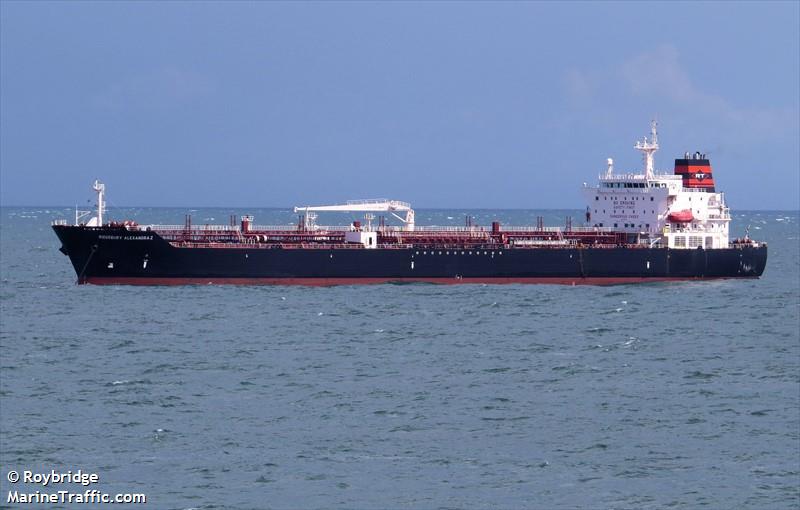
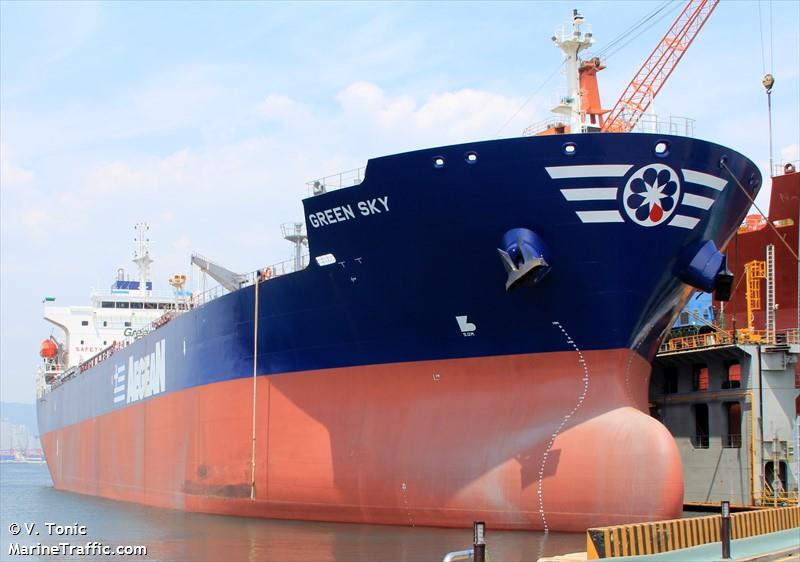
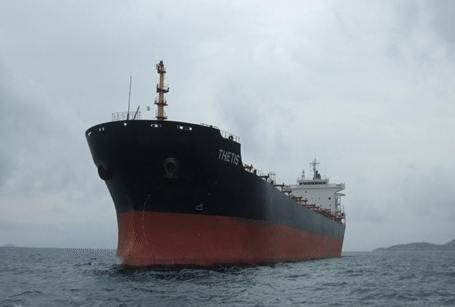
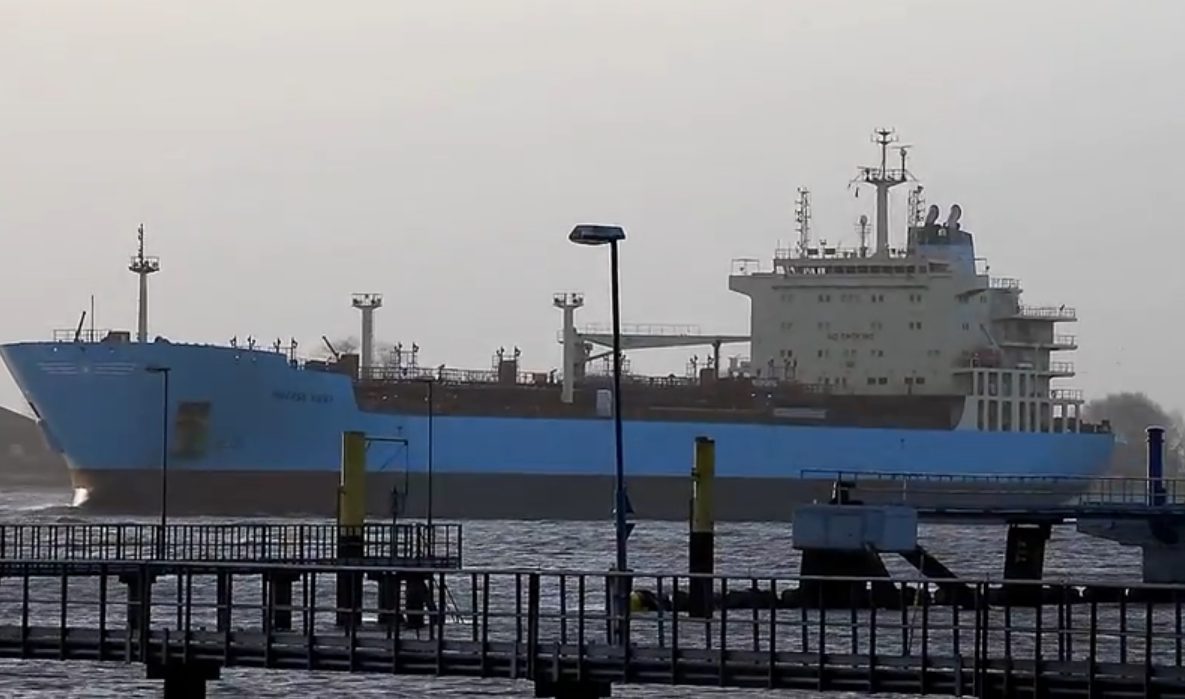
So for those in the media or with a passing interest here is a picture of an Oil Tanker and the Cosco Busan:

Tanker

Oil Tanker

Container Ship

Container Ship Cosco Busan

The major difference between the two is: a tanker transports liquids and a container ship transports containers filled with solids (i.e. toys, home furnishings, industrial supplies…). So before the flood of emails arrive… if the ship that hit the San Francisco Bay Bridge was not transporting any liquids why did it have 58,000 gallons aboard? The answer is… for the same reason your car carries 24 gallons of gasoline.

The fuel spilled in the bay was all to be used by the ship’s enormous engines during the long transit back to China. Had this ship been an oil tanker the spill could have been as large as the one caused by the oil tanker Exxon Valdez… then again probably not since the oil in those ships are now required to be protected by a double hull.

CommentsTags: · , , , , , , , , , , , , , , ,